I Started Going Back to Bed After Waking Up—and My Mornings Stopped Feeling Like a Battle
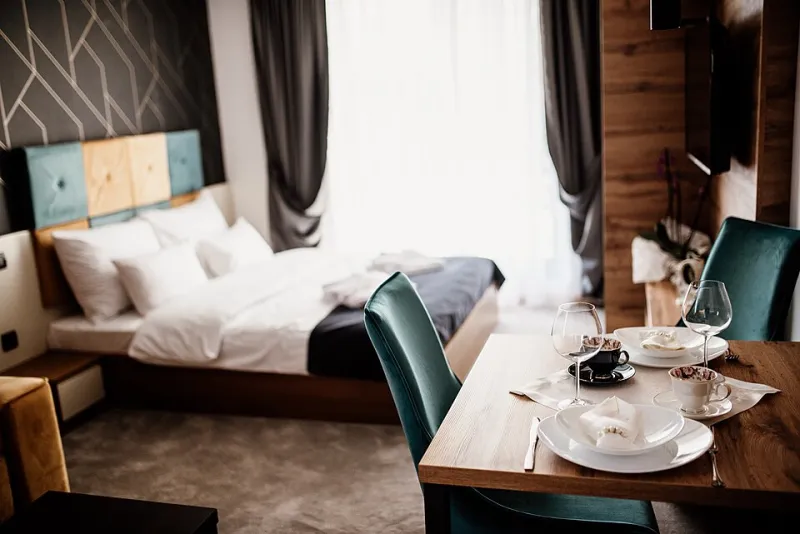
Photo: Shixart1985, CC BY 2.0, via Wikimedia Commons
Let me be clear about how ridiculous this sounded when my friend Yuki first explained it to me over ramen: "In Japan, some people go back to sleep after they wake up. On purpose. It's called asa-ne."
I laughed. Then I went home, looked it up, and realized I'd accidentally been doing a chaotic version of it my entire adult life—except my version involved hitting snooze eight times and waking up angrier than when I fell asleep.
Asa-ne (朝寝, literally "morning sleep") is different. It's an intentional, brief return to rest after your first wake-up. Not a snooze-fest. Not doom-scrolling in a horizontal position. A deliberate second wind-down, usually 10 to 30 minutes, that some sleep researchers say works with your biology instead of against it.
I ran a two-week experiment. Here's my honest report.
The Problem With My Current Wake-Up (Yours Too, Probably)
My old routine: alarm at 6:45, snooze until 7:10, then a frantic scramble of coffee, cold cereal, and a video call where I looked like a hostage.
Here's what's actually happening in those snooze minutes. When your alarm yanks you out of deep sleep, you get hit with sleep inertia—that cement-brained fog that makes brushing your teeth feel like a cognitive challenge. Fragmented snoozing makes it worse, because every time you drift back down, you start a new mini sleep cycle you can't finish.
But there's a twist: some researchers studying segmented sleep argue that a single, intentional second rest—long enough to actually descend into light sleep—can ease that transition instead of chopping it into pieces. Historical sleep patterns were rarely one solid block, and some cultures never abandoned the idea that humans do fine with more than one sleep episode.
There's also cortisol. Your cortisol awakening response gives you a natural chemical push in the first 30–45 minutes after waking. Fighting it by forcing yourself to be instantly productive is like flooring the gas in a cold engine. Asa-ne, in theory, lets the engine warm up.
My Two-Week Asa-Ne Protocol
I'm a freelancer working from a small apartment in Ohio, so I had flexibility. Here's the system I settled on by day three (the first two days were a mess—more on that):
- Alarm at 6:45. Get up. Use the bathroom. Drink half a glass of water. Open the curtains.
- Set a timer for 20 minutes. Get back under the covers, phone in another room.
- Rest, don't force sleep. Eyes closed, blanket up, zero pressure to actually conk out.
- When the timer goes off, get up for good. No third round. Non-negotiable.
- Coffee after the second wake-up, not before.
That last rule felt brutal at first. It was also, I suspect, the secret.
Week One: The Adjustment Phase (a.k.a. Confusion)
Days one and two were genuinely weird. My brain interpreted "back to bed" as "it's Saturday" and I overslept by 50 minutes on day one, blowing up my morning. Day two I couldn't relax at all and just lay there doing anxious math about my to-do list.
By day three, something clicked: the timer. Knowing the rest was bounded let my body actually let go. I wasn't sleeping deeply—I'd describe it as 70% awake, 30% delicious horizontal nothing—but when the timer chimed, I got up feeling oddly... assembled. Like my brain had run a soft reboot instead of being forced through a hard restart.
Week Two: The Results, Honestly Tracked
I kept a dumb little spreadsheet. Ratings from 1–10 for grogginess, focus, and mood at 8 a.m., 11 a.m., and 3 p.m.
- Morning grogginess: dropped from an average of 7 to about 3 by week two. The difference between snoozing and asa-ne, for me, was the difference between waking up at someone and waking up next to them.
- Coffee: I went from two cups to one, and the second cup had been purely functional before. I don't miss it.
- The 3 p.m. crash: milder, though not eliminated. Nothing was going to fully save my 3 p.m., let's be real.
- Mood: the biggest surprise. Starting the day without the alarm-battle adrenaline left me noticeably less snappy with my editor.
One honest caveat: on two days I felt more sluggish after the second rest, probably because I'd slept badly the night before and dropped into deeper sleep. Asa-ne isn't a substitute for real sleep. It's a supplement, not a repair kit.
Want to Try It? The Busy-Person Version
You don't need my freelancer schedule. Here's the compressed version:
- Wake at your normal time, but get up. Feet on floor, water, light. This matters—staying horizontal while scrolling defeats the whole purpose.
- Give yourself 15 minutes of rest only if your schedule allows. If you have to be out the door at 7, skip it. A rushed asa-ne is just snoozing with better branding.
- Use a timer across the room. The boundary is what makes it work.
- Save your caffeine for after. Coffee on an already-cortisol-flooded system was doing less for me than I thought.
- No phone in the rest period. This is the hill I'll die on.
If you work from home, this slots in almost invisibly before your first meeting. If you commute, even a weekend version two days a week seemed (anecdotally, in my n-of-one spreadsheet) to take the edge off Monday's worst grogginess.
Is This Just Fancy Snoozing?
Sort of! But the intent flips it. Snoozing is your body begging for more sleep in hostile little fragments. Asa-ne is a chosen, calm second rest that respects your wake-up instead of fighting it. One is a panic response; the other is a ritual.
Two weeks in, my mornings feel less like a fire drill and more like a ramp. My energy is smoother, my coffee is a pleasure instead of a crutch, and I've stopped starting every day feeling behind.
Will a 20-minute morning rest fix your life? No. But if your first hour currently feels like a wrestling match with your own alarm, asa-ne is a cheap, weird, surprisingly gentle way to wave the white flag—and get your genki back in the process.