Snooze Button Anonymous: My 21 Days of Asa-Dachi (Walking Before My Phone Even Wakes Up)
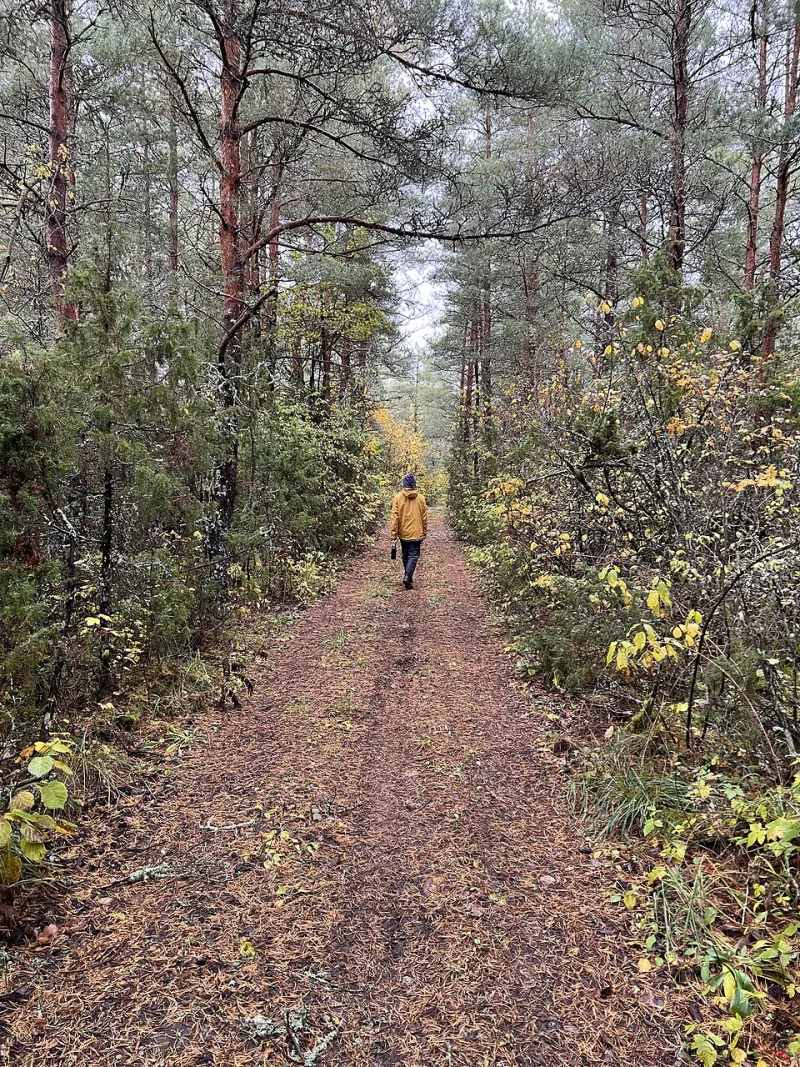
Photo: Nature Estonia, CC0, via Wikimedia Commons
I hit snooze five times most mornings. Five. That's roughly 45 minutes of the worst sleep of my life, taken in shrinking, jittery installments. So when I stumbled across asa-dachi (朝立ち)—the old Japanese habit of rising with the sun for a morning walk—I was skeptical, then desperate, then all in.
The rules I set for myself were simple and, honestly, kind of brutal: wake at 6 a.m., put on shoes, walk outside for 20 to 30 minutes, and do not touch my phone until after I'm back. No scrolling. No notifications. No doom-reading the news at a stoplight. Twenty-one days.
What Exactly Is Asa-Dachi?
Asa-dachi literally means "standing in the morning," but the practice is more about rising early and getting outside. It pairs naturally with chōyō no asa (朝容の朝)—the tradition of greeting the morning sun as something nourishing, a moment to absorb the day's first light rather than sleep through it. In Japan, morning walks are woven into daily life: retirees doing radio taiso in the park, students trudging to school, neighbors exchanging a quick ohayō gozaimasu.
There's real science underneath the tradition. Morning light exposure is one of the strongest signals for setting your circadian rhythm. Get bright light in your eyes within an hour of waking and your body clock nudges earlier, which makes falling asleep at night easier. It's a feedback loop that works in your favor instead of against you.
Week One: This Is a Trap and I Hate It
Days one through five were rough. My alarm went off at 6, my brain negotiated like a hostage situation, and I lost two mornings to the snooze button entirely. When I did get out, it was February-gray in my Ohio neighborhood, and I wondered what exactly the sunrise was supposed to be doing for me behind a wall of clouds.
But something small shifted by day six. I noticed I wasn't reaching for my phone in bed anymore—because the deal was, no phone until after the walk. That meant my first thirty minutes of consciousness belonged to me. No emails. No group chats. Just geese and a neighbor's very judgmental cat.
Week Two: The Sleep Surprise
Here's what I didn't expect: the big change wasn't in the mornings. It was at night. By the second week, I was getting sleepy around 9:30, which for a lifelong midnight scroller is basically a medical event. My sleep tracker (okay, fine, my phone—but after the walk, I promise) showed my deep sleep climbing about 20 minutes a night on average.
My mood shifted too. Not in a dramatic, movie-montage way, but the walk became a buffer zone between sleep and the world. Instead of waking up already behind—already reacting to other people's demands—I got twenty minutes of nobody needing anything from me. Turns out that's a decent definition of genki ga deru: energy that comes from somewhere.
Week Three: The Part Where I Almost Quit
Day fifteen, it rained sideways. Day sixteen, I was up late for a work deadline. This is where most morning routines die, so here's my honest advice: lower the bar, don't drop it. A ten-minute walk in a drizzle still counts. The streak matters less than the signal you're sending your body clock—same time, same light, every day.
By day twenty-one, I wasn't white-knuckling it anymore. I was just... up. And weirdly, I'd started doing what the Japanese morning-walkers do: nodding at other early risers. There's a whole secret society of 6 a.m. people out there, and they're friendly.
The 3-Step Asa-Dachi Framework for Serial Snoozers
If you're a five-snooze person, don't start with a 5 a.m. alarm and a 5K. Start here:
1. Move your phone across the room tonight. The snooze cycle only works if the phone is within arm's reach. Make it a hike to turn off the alarm, and you're already up.
2. Walk before you scroll—no exceptions for 14 days. Even ten minutes. The phone rule is doing half the work here; morning light is doing the other half. Bundle them.
3. Anchor it to something you like. I ended my walk with a real breakfast and green tea instead of a desk coffee chug. Give your brain a reason to want to be up.
The Verdict After 21 Days
Did asa-dachi transform my life? No. Am I now a person who springs out of bed singing? Absolutely not. But I fall asleep faster, wake up before my alarm more often than not, and my average daily screen time dropped by over an hour—all from a habit that costs nothing and takes twenty minutes.
The old Japanese idea that the morning sun is something to be received, not slept through, turns out to be less superstition and more circadian biology with a nice view. If your mornings currently feel like a hostile negotiation with a smartphone, try standing in the early light for a few weeks. Your 2 p.m. self will thank you.