Ganbatte Is Not Praise: Why I Retired Japan's Most Useful Word From My Self-Talk
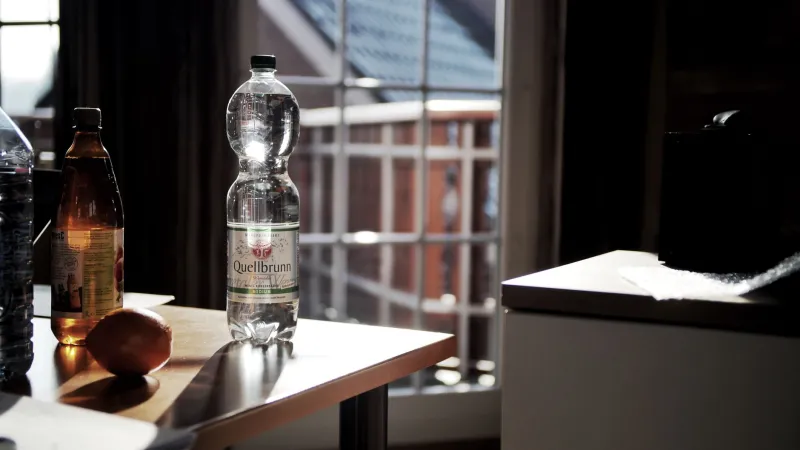
The alarm goes off at 6:40. Before my feet touch the floor, some part of me reaches for a sentence. For years that sentence was some version of try harder. And for years I misunderstood which word I was reaching for.
One Word, Three Different Jobs
Americans who borrow ganbatte usually learn one meaning: do your best, push through, you got this. It arrives in motivational captions and on gym wall decals, usually in bold uppercase, usually at somebody who is already tired.
But in everyday Japanese, ganbatte is not one fixed instruction. Its meaning shifts with who says it, when, and in what form.
- Ganbatte ne, said gently to a friend before an exam, is closer to 'hang in there, I am rooting for you.' It is warm. It is not a performance review.
- Ganbatte kudasai, said by someone with authority, can land as 'please make the effort.' Same characters, colder room.
- Ganbarimasu, said about yourself, is a commitment you are announcing to other people — polite, forward-looking, slightly formal.
- Ganbarou, said with a group, is joint resolve. It is the word you use when everyone is in the same long week.
- Yoku ganbatta ne, in the past tense, means 'you worked hard and I saw it.' This is the form that actually feels good to receive.
The word is not the problem. The problem is that English borrowed the imperative and left behind all the context that made it survivable.
What We Imported
Here is what a lot of American wellness content did with ganbatte: it took a phrase whose native use is often relational and soft, stripped the relationship out, and turned it into a lone individual telling themselves to absorb more strain. It became hustle culture with better typography.
Which brings us to the thing this site is literally named after. Genki means energy, vitality, being well. Not gritting your teeth with a full calendar and a misfiring nervous system. Genki is what shows up when the conditions are right — sleep, food, light, movement, honest boundaries, and a mind that does not consider rest a moral failure.
Ganbatte and genki are not the same direction of travel. Ganbatte squeezes the lemon. Genki waters the tree.
The Morning Version, Which Is Where It Actually Bites
I picked mornings as the battleground on purpose. The first sentence you say to yourself at 6:40 a.m. sets the price of everything that follows. If that sentence is 'come on, do better than yesterday,' I have already borrowed against the whole day before I have had water.
Try this instead. Treat the first thing you say to yourself as a scheduling decision, not a personality trait.
On a genuinely low day, the useful question is not 'how do I try harder.' It is 'what is the smallest honest thing I can do, and what can come off the list?' That is not softness. That is load management, and it is the same logic a good trainer uses when your knee hurts.
Five Swaps That Work Better
These are the phrases I actually use now, in English, with a little Japanese scaffolding. Steal whatever helps.
- Instead of 'ganbatte,' try 'muri shinaide' — do not force it. This is a real Japanese phrase and it is used sincerely, not sarcastically. It gives you permission to stop before something breaks.
- Instead of 'push through,' try 'kyukei shiyou' — let us take a break. Note the 'let us.' You are negotiating with yourself, not issuing orders.
- Instead of 'you got this,' try 'yoku ganbatta ne' — you worked hard and I saw it. Past tense. Praise after the effort, not pressure before it. Use this on yourself at 4 p.m., not 6:40 a.m.
- Instead of 'no excuses,' try 'korede ii' — this is good enough. Not for everything. For the third draft of an email nobody will read closely.
- Instead of a five-item morning list, try one sentence: 'odayaka ni' — calmly. It is a tone, not a task, which is exactly why it survives contact with a real morning.
None of these are productivity hacks. They do not make you do more. What they do is keep the ledger from going so far into debt that a bad Tuesday turns into a bad month.
The Objection, Answered
Someone will say this is lowering standards. I have said it myself, usually while over-caffeinated and behind on something.
But notice what the high-standard version actually produces: a week of overreach, a weekend of collapse, a Monday of dread. That is not discipline. That is a debt cycle with a workout class attached.
If you want the most output over a year, the question is never how hard you can push on a good day. Anybody can spend a good day. The question is what keeps you functional on the fourth consecutive bad one — and 'try harder' has never once been the answer to that question for me.
What I Say Now
My alarm still goes off at 6:40. Some mornings the honest sentence is 'let us go, big day.' Some mornings it is 'water, then decide.' Both are allowed. Neither one is a verdict on my character.
Ganbatte is a good word with a good home. It belongs on a greeting card to a friend, not on the inside of your own skull before sunrise. On low-energy days, the more useful energy move is to ask what would genuinely help — and then to believe your own answer.