I Let Tomorrow Me Take Over for Two Weeks: The Nightly 15-Minute Prep That Erased My Morning Chaos
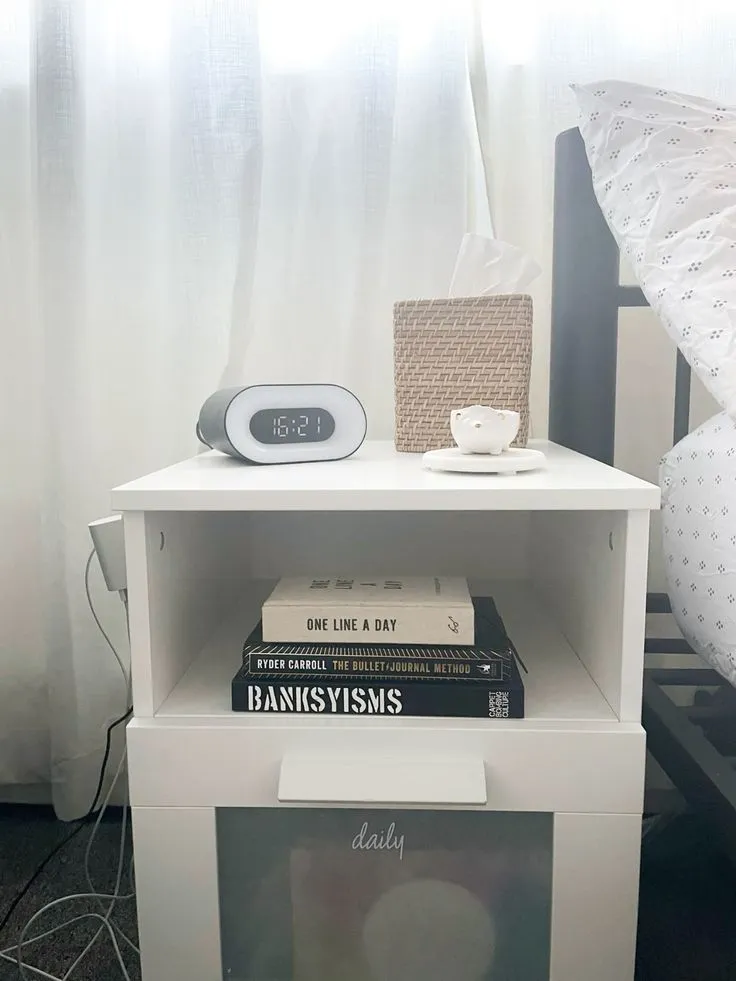
Photo: tidy nightstand with planner notebook clothes laid out for morning warm lamp light, via i.pinimg.com
I used to think my mornings were a willpower problem. I'd wake up already behind, standing in front of the closet in the dark, negotiating with myself about pants, while a mental tab ran in the background: What's for breakfast? When's that meeting? Did the kids' permission slip get signed?
Then I stumbled on a concept from Japanese business culture called nemawashi (根回し). Literally translated, it means "going around the roots"—the practice of preparing the ground before you plant a tree. In Japanese workplaces, it means quietly laying groundwork with everyone involved before a big meeting, so the actual meeting is a formality. Nothing gets decided cold. Everything gets warmed up in advance.
I don't run meetings. I run a household and a calendar full of them. But the idea hit me sideways: what if I treated my mornings like that meeting? What if I stopped showing up cold and started prepping the ground the night before?
So for two weeks, I gave tomorrow me a 15-minute head start every evening. Here's how it went.
The Experiment: 15 Minutes, Three Jobs
The rules were simple. Between 8:30 and 9:00 p.m.—after dinner cleanup, before I sat down to actually relax—I set a timer for 15 minutes and did exactly three things:
- Pre-write tomorrow's to-do list. Not a brain dump. A short, ranked list of the top three things that actually matter, plus any appointments. If it didn't fit on a sticky note, it didn't make the cut.
- Decide breakfast before bed. Oats soaking in the fridge, eggs on the counter, the blender pulled out and ready. No standing in front of the fridge making a 7 a.m. judgment call.
- Lay out clothes, bag, and anything leaving the house. Gym bag by the door, water bottle filled, laptop bag packed, jacket on the hook.
That's it. No elaborate journaling, no color-coded planner, no five a.m. guru nonsense. Fifteen minutes of nemawashi for a household of three.
Week One: The Weird Disorientation of Easy Mornings
The first morning, I genuinely didn't know what to do with myself. I got dressed in about ninety seconds, ate breakfast I hadn't had to think about, and sat down at my desk at 8:40 with my top task already written on a sticky note.
I kept waiting for the catch. The thing nemawashi can't prepare you for. And sure enough, on day four, my daughter woke up with a fever and the whole plan collapsed—but here's the difference: because the list was already written, I could see instantly what to punt and what to protect. The prep didn't prevent chaos. It just meant chaos had a filing system.
By the end of week one, my sleep tracker (yes, I checked) showed me falling asleep about ten minutes faster on prep nights. I suspect it's because the 15-minute ritual doubles as a shutdown routine—my brain wasn't rehearsing tomorrow at midnight because tomorrow was already handled.
Week Two, Days 8–10: The Control Week
To keep myself honest, I ran a comparison. Three days, no prep. Back to cold mornings, back to closet negotiations, back to deciding breakfast while the coffee brewed.
The data was embarrassingly clear:
- Time from alarm to sitting down working: 68 minutes on prep days vs. 94 minutes on non-prep days.
- Snack breaks before 11 a.m. (my proxy for stress grazing): one on prep days, three or four without.
- Self-reported mood on a 1–10 scale in my notes app: averaging 7.5 with prep, 5.5 without.
The non-prep mornings weren't disasters. They were just frictiony—a hundred tiny decisions, each cheap on its own, stacking into a low-grade hum of exhaustion before 9 a.m.
What Nemawashi Actually Is (and Why It Works at Home)
In Japanese business settings, nemawashi is considered half the job. The phrase for it—"the meeting is held to confirm what's already been decided"—sounds rigid to American ears. We like improvisation. We romanticize thinking on our feet.
But decision fatigue is real, and it's most expensive right when you wake up, when your willpower account is at zero. Every choice you make the night before is a choice your morning self doesn't have to fund. In a sense, evening me is the manager and morning me is the employee—and for two weeks, evening me finally started doing her job.
The Copy-It-Yourself Template
If you want to steal this, here's the whole system on one card:
When: 15 minutes, same time every evening (after dinner works best for me)
1. Tomorrow's Big Three — Write the three things that would make the day a win. Appointments count.
2. Breakfast Decision — Pick it, stage it, prep what you can. Soaking oats counts.
3. Launch Pad — Clothes out, bag packed, water bottle filled, everything leaving the house by the door.
Bonus (if time remains): One line in a notebook—anything you're worried about, so it stops circling.
The rule: When the timer dings, you're done. Nemawashi is groundwork, not a second shift.
Two Weeks Later
Do I still have chaotic mornings? Sure—life doesn't respect sticky notes. But the baseline has shifted. My mornings went from a scramble to a runway, and the 15 minutes it costs me at night comes back with interest before 9 a.m.
Turns out the Japanese had it right in the office and the kitchen: nothing grows well when you plant it into unprepared ground. Tomorrow me sends her regards.