The 20-Minute Desk Nap I Was Embarrassed to Take: Two Weeks of Inemuri, Scored by My Own Afternoons
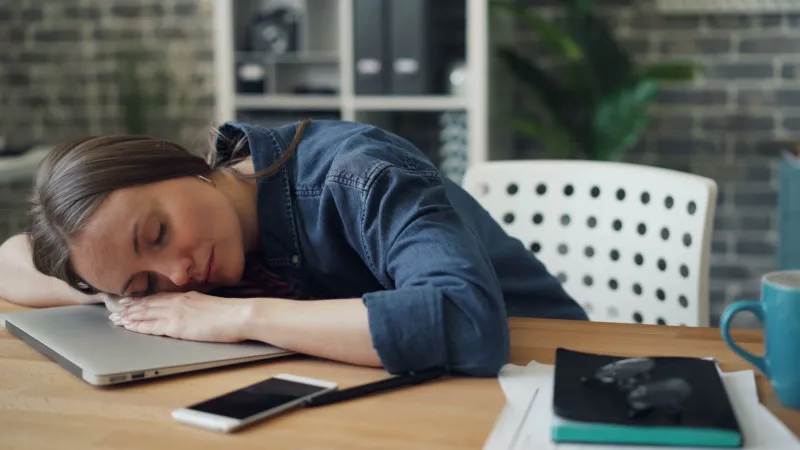
The first time I napped at my desk, I did it wrong in every possible way. I slumped sideways, mouth open, phone face-up next to my keyboard, and woke up forty minutes later with a keyboard-shaped crease on my cheek and a small panic about whether anyone had walked past my office door.
That was my old idea of a desk nap: something you do accidentally, apologize for, and never mention. Then I read about inemuri and realized I had been doing the wrong thing entirely, in the wrong posture, for the wrong length of time.
What Inemuri Actually Means
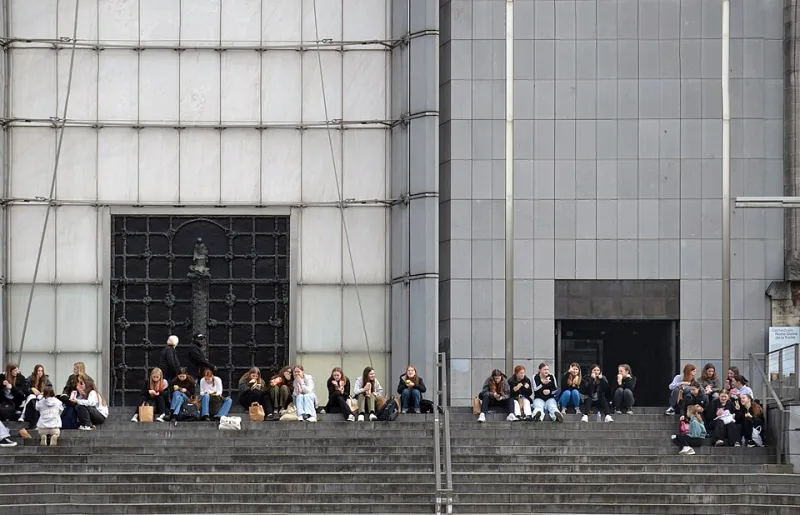
Inemuri (居眠り) translates roughly to 'being present while sleeping.' The word itself is a small admission: you are still here, still part of the room, just briefly offline. In Japan you will see it on commuter trains, in meeting rooms, in lecture halls. It is generally read as a sign that someone has been working hard enough to need a moment, not as evidence that they are lazy.
That framing is doing a lot of quiet work. In the US, a nap at your desk reads as a confession that you cannot handle your day. In the inemuri framing, it reads as maintenance. Same twenty minutes, completely different story about what those twenty minutes mean.
I wanted to know whether the story was the whole trick or whether the actual nap did anything. So I gave myself a two-week trial.
The Protocol I Followed
I did not free-form this. The point was to test a repeatable habit, not a vibe.
- Fixed window: between 1:30 and 2:30 p.m., always. Same slot daily so my body could learn it.
- Twenty minutes on the clock. Alarm set, phone face-down across the desk, out of arm's reach.
- No scrolling beforehand. This turned out to be the hardest rule. Scrolling is not a wind-down; it is a stimulant with a warm color palette.
- Upright chair, not couch. Leaning back slightly, hands in my lap, feet flat. This is the inemuri posture — you look like someone resting their eyes at work, because you are.
- Eye mask, cheap and unglamorous. Mine came in a three-pack for eleven dollars.
- Stand up immediately after the alarm. No second snooze, no lingering.
- No caffeine after the nap. If I needed coffee to recover from a twenty-minute nap, I had done it wrong.
Each weekday at 3 p.m. I gave myself two ratings on a 1-to-5 scale: focus and mood/energy. Then each night I logged one thing: how long it took me to fall asleep.
Week One: The Ratings
| Day | Focus at 3 p.m. | Energy | Night notes |
|---|---|---|---|
| Mon | 3 | 3 | Overshot to 35 min. Groggy for an hour. |
| Tue | 4 | 4 | Best afternoon in a month. Asleep by 11. |
| Wed | 4 | 3 | Slept badly the night before; nap helped a little. |
| Thu | 3 | 3 | Slept in a meeting chair. Neck complained. |
| Fri | 5 | 4 | Genuinely sharp. No 3 p.m. snack. |
Week one average: 3.8 on focus. Before the experiment I would have rated my typical 3 p.m. self a 2, and I had the receipts to prove it — two empty coffee cups and a browser history full of nothing.
Week Two: The Real Test
Week two was a heavier workload and a worse sleep week, which made it a better test. Focus ratings held at 3.6 average, but two things changed that I did not expect.
First, I stopped needing the afternoon snack. The 3 p.m. pretzel run was less of a hunger problem and more of a 'my brain is ramping down and I want something to do' problem. A nap replaced it without my trying.
Second, my 5 p.m. self got nicer. I had not tracked that. By the end of a workday I am normally short with people and useless at decisions. On nap days I was measurably less prickly, which is a strange thing to notice about yourself and an even stranger thing to have to write down.
Where It Went Sideways
The failures are more useful than the averages.
- Twenty and thirty are not the same number. On the day I overslept to thirty-five minutes, I woke up in what sleep researchers call sleep inertia and spent an hour feeling like I was thinking through a wet towel. Twenty is not a guideline, it is the whole cost of admission.
- Napping because I was avoiding something felt different from napping because it was 1:40. On avoidance days I would wake up and go back to the same task I was fleeing. Same nap, different results.
- Late naps broke my evenings. One 4 p.m. attempt pushed my bedtime back past midnight.
- Lighting matters. The one day I napped against a bright window was a waste of twenty minutes.
The Part That Made Me Rethink the 3 P.M. Crash
Here is what two weeks taught me: my 3 p.m. crash was not usually a signal that something was wrong with me. It was a signal that I had been treating my energy like a moral test.
The American reflex is to power through. That phrase sounds like resilience, but functionally it means: keep spending energy while telling yourself that spending energy costs nothing. Powering through is not a strategy. It is a decision to stop noticing the leak.
Taking a twenty-minute, structurally boring, unmistakably deliberate nap is the opposite move. It is small, scheduled, and completely undramatic. Nothing about it looks heroic, and that might be the reason it works.
Copy This at Your Desk
You do not need a nap room, a beanbag, or a colleague with a helpful sign. You need a chair and a boundary.
- Pick a fixed window between 1 and 2:30 p.m. Put it on your calendar as a private block if you can; call it a focus break if the word nap gives you a rash.
- Phone down and away. Alarm for twenty minutes. Do not negotiate with yourself, because you will lose.
- Lean back, feet flat, eye mask on. Do not lie down and do not get horizontal on a couch — that is a different activity with a different alarm threshold.
- Do not scroll before, do not check messages after. Stand up at the buzzer.
- Rate your 3 p.m. focus for a week. Five numbers will tell you more than five wellness articles.
If you have an open-plan office and feel watched, a park-and-ride, a car, or a closed door for twenty minutes all work. The dignity is in doing it on purpose, not in where it happens.
Would I Keep It?
Yes, with the twenty-minute cap treated as non-negotiable. I keep the mask in my drawer next to my pen, which is a strange pairing and feels exactly right. My afternoons are not transformed. They are just less expensive.
Inemuri gave me better language for this than any productivity book did: you can be present and also be resting. You just have to be deliberate about which one you are doing.