No Screens, No Emails, No Guilt: I Ran My Lunch Hour Like a Tiny Japanese Inn for Two Weeks
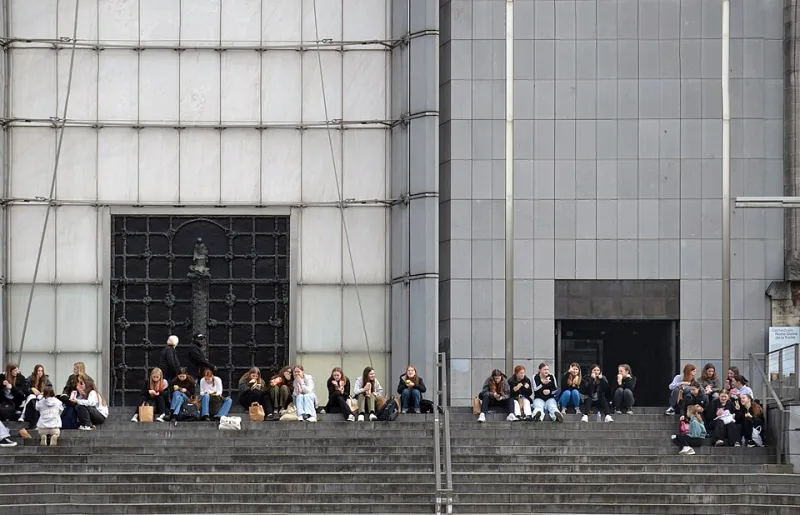
Photo: DimiTalen, CC0, via Wikimedia Commons
I want to describe how I used to eat lunch, because I have a feeling it'll sound familiar: laptop open, fork in one hand, phone in the other, Slack notifications piling up like dishes in a sink. Sometimes I'd finish my food without tasting a single bite. Sometimes I'd forget to eat entirely and wonder why I wanted to crawl under my desk by 3 p.m.
Then I came across a Japanese idea that stopped me mid-scroll: kūkan jikan — literally "space time," or deliberate open time. The idea isn't about doing more with your break. It's about leaving actual emptiness in your day on purpose. Not wasted time. Protected time.
So for two weeks, I ran my lunch hour like a tiny Japanese inn. Check in, slow down, check out. Here's what happened.
The Rules of My Micro-Vacation
I kept it embarrassingly simple. Every workday for ten business days, my lunch hour had to include:
- Zero screens. Laptop closed, phone face-down in a drawer (not my pocket — the drawer, because pockets are where good intentions go to die).
- Eating somewhere that is not my desk. Kitchen table, park bench, break room, anywhere.
- A slow walk. Ten to fifteen minutes, no destination, no step goal.
- Ten minutes of daylight. Outside if possible, by a big window if not.
That's it. No journaling, no meditation app, no "optimizing" anything. The whole point of kūkan jikan is that the space itself does the work. You're not supposed to fill it with another self-improvement project — that's just burnout wearing a yoga outfit.
Week One: The Withdrawal Was Real
Days one and two were genuinely uncomfortable. I didn't realize how attached I was to the low-grade hum of my phone until it wasn't there. My hand kept drifting to my pocket like a phantom limb. At one point I caught myself standing at the microwave just... staring at it. Riveting stuff.
But somewhere around day three, something shifted. The walk stopped feeling like a delay and started feeling like a border — a clean line between my morning brain and my afternoon brain. I'd come back to my desk and, instead of staring blankly at my inbox trying to remember what I was doing, I'd just... start working. It was eerie.
By Friday of week one, a coworker asked if I'd changed my coffee order. I hadn't. I'd just stopped spending my lunch hour marinating in cortisol.
What the Research Says (Because I Checked, Paranoid)
Turns out my experience tracks with actual science. A widely cited study from DeskTime, which analyzed millions of work sessions, found that top performers worked in focused stretches of about 52 minutes followed by roughly 17 minutes of true rest. Not "rest with emails." Rest.
Other research on "psychological detachment" — the feeling of genuinely being off the clock, even briefly — shows it's one of the strongest predictors of afternoon energy and lower end-of-day exhaustion. Eating at your desk, meanwhile, has been linked to more negative emotions at work, not fewer. The sad desk salad isn't just sad. It's counterproductive.
And daylight? Even brief midday light exposure helps anchor your circadian rhythm, which pays dividends at bedtime. My two-week experiment accidentally became a sleep experiment too — I was falling asleep faster without changing anything else.
The 60-Minute Template (Steal This)
Here's the exact structure I settled on, adjusted for people whose lunch "hour" is more of a lunch 47 minutes:
- Minutes 0–10: The Walk Out. Leave your desk. Actually leave. Walk a slow loop, inside or outside. No podcast, no phone. Let your brain idle like a car at a red light.
- Minutes 10–40: A Real Meal. Eat food you somewhat enjoy, somewhere that isn't where you work. If you can eat with a coworker and talk about anything except the project, even better — the Japanese have a word, gochisō, for a meal that's treated as a small celebration. Borrow that energy.
- Minutes 40–50: Daylight Dose. Step outside or sit by the sunniest window you can find. Ten minutes. Do nothing. This is the kūkan jikan core — the deliberate emptiness.
- Minutes 50–60: The Walk Back. Reverse commute. On the way, think of the one thing you'll do first when you sit down. Just one. Then start there.
If your lunch is only 30 minutes, halve everything. The walk and the daylight are non-negotiable; the rest flexes.
Two Weeks Later: The Honest Scorecard
What improved: My 2 p.m. slump went from "wall of fog" to "mild incline." I stopped doom-scrolling in the afternoons, mostly because I wasn't desperate for dopamine anymore. I also stopped eating lunch like a raccoon going through trash — slower meals meant I actually felt full.
What didn't: I still had days where a meeting ran over and the whole thing collapsed. Kūkan jikan isn't magic; it's a habit, and habits get knocked over. The trick I learned: if the full hour fails, take the ten minutes of daylight anyway. A shrunken vacation beats no vacation.
The bigger change: I stopped thinking of breaks as time stolen from work and started thinking of them as maintenance. You don't feel guilty about charging your phone. Your brain runs on the same logic.
Try It Tomorrow, Not Someday
You don't need a two-week experiment. You need one lunch. Tomorrow, put your phone in a drawer, walk out the door, eat like a person, and stand in the sun for ten minutes doing absolutely nothing.
That's the whole system. It's the least impressive wellness routine I've ever done, and — two weeks in — it gave me more back than almost anything else I've tried. Sometimes the most productive thing you can do at noon is nothing at all, on purpose.