30 Days Without Coffee: My Honest Green Tea Experiment (The Good, the Weird, and the 3 P.M. Test)
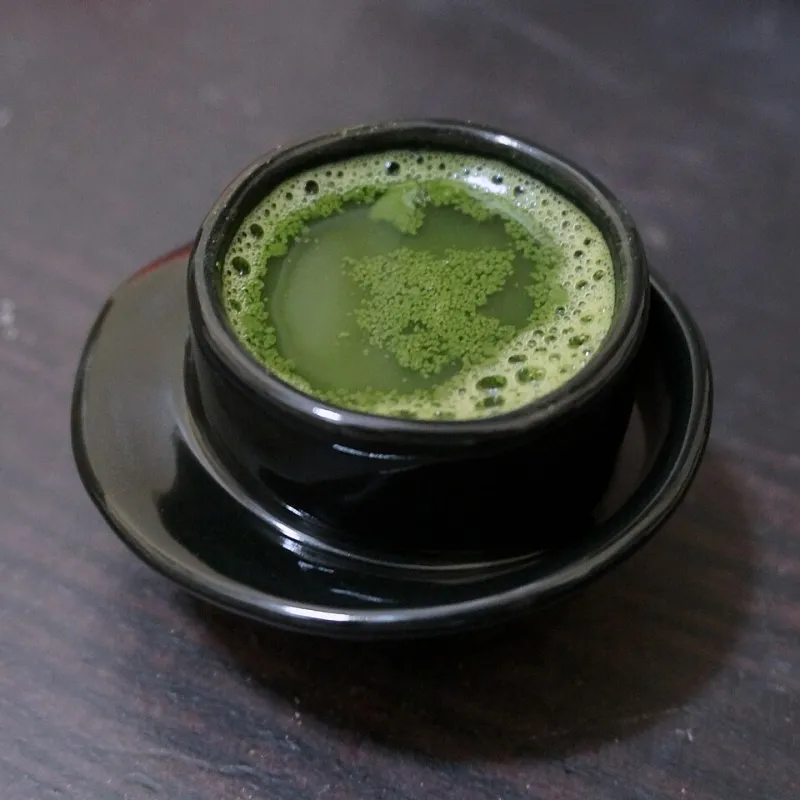
Photo: mike from New York, NY, US, CC BY-SA 2.0, via Wikimedia Commons
I've been a two-cups-before-9-a.m. coffee person since college. So when I decided to spend 30 days drinking only green tea — sencha in the morning, matcha before deep work, hojicha in the afternoon — I expected withdrawal headaches and misery.
I got a little of that. But I also got something I didn't expect: afternoons where I wasn't white-knuckling it until 5 p.m.
Week One: The Grumpy Adjustment
Days one through five were rough. Green tea has roughly a third to half the caffeine of coffee (about 30–50mg per cup versus 95mg+ for drip), and my body noticed. I had the dull headache, the fog, the reflexive reach for a mug that wasn't there.
By day six, though, something shifted. My mornings were calmer — alert without the jittery edge. I wasn't typing faster, but I was typing steadier, if that makes sense.
Why Tea Feels Different: The L-Theanine Factor
There's real science behind this. Green tea contains L-theanine, an amino acid that promotes alpha brain wave activity — the state associated with calm alertness. Studies suggest the theanine-caffeine combo produces smoother, more sustained attention than caffeine alone, without the spike-and-crash.
Matcha is the heavy hitter here. Because you consume the whole ground leaf, you get more of everything: more caffeine than steeped sencha, and a bigger dose of theanine. It's the closest thing to coffee in the tea family — which is why I saved it for writing sessions.
Hojicha, roasted over charcoal, is naturally low in caffeine. It became my 3 p.m. cup: warm, toasty, and late-day-safe.
The Tracking Results
I kept a simple daily log. Here's the honest rundown:
Focus: Slightly lower peak intensity than coffee, but dramatically more consistent. My old pattern was a 10 a.m. high and a 2 p.m. collapse. On tea, my energy looked like a gentle plateau.
Sleep: This was the biggest win. I use a sleep tracker, and my average deep sleep increased about 12% over the month. Caffeine's half-life is 5–6 hours, so my old 4 p.m. coffee was likely still in my system at midnight. Tea's lower doses and gentler curve fixed that without me changing anything else.
The 3 p.m. test: I still felt an afternoon dip — let's be real, no beverage eliminates it — but it was a soft slope instead of a cliff. A cup of hojicha and a five-minute walk carried me through.
The bathroom situation: Coffee's... urgency... was gone. I'll leave it at that.
Who Should (and Shouldn't) Switch
Try it if: you get jitters or anxiety from coffee, your sleep is mediocre, you crash hard in the afternoons, or you're on your third cup by lunch and feel no better for it.
Skip it if: you genuinely love coffee and feel great — the ritual and joy matter. Also, if you're pregnant, sensitive to caffeine, or on medications that interact with it, talk to your doctor before changing anything. And note that matcha can contain trace lead and other heavy metals from the leaves; stick to reputable brands and don't go overboard.
My Verdict
I didn't quit coffee permanently. But I didn't go back to my old habit either. These days it's matcha most mornings, coffee maybe twice a week, and hojicha when the afternoon slump hits.
The biggest lesson wasn't about tea at all. It was that my energy problem wasn't a caffeine problem — it was a spike problem. Once I smoothed out the curve, everything downstream got easier. If your afternoons feel like a slow-motion crash, a month of green tea might be the gentlest experiment you can run. Kanpai — to steadier mornings ahead.